When rising damp starts spreading from the base of a wall, it’s not something to ignore. What often begins as a faint tide mark or peeling wallpaper can point to a bigger problem affecting the structure of your home.
The main causes of rising damp usually come down to moisture moving up through brickwork or stone, either because the damp-proof course has failed or because ground levels outside are too high. If it’s not dealt with, the damage gradually spreads; plaster breaks down, timber rots, and that musty smell lingers.
This article looks at why rising damp appears in the first place, how to tell it apart from other damp problems, and the steps you can take once you’ve identified the cause.
Why does rising damp suddenly appear?
Rising damp often feels like it appeared overnight, but in truth, it’s usually been developing silently in the background. What makes it suddenly visible are changes in the environment or building conditions that push moisture to the surface.
Common causes of rising damp that make it appear include:
- Heavy rainfall or seasonal shifts – Long, wet spells can speed up how fast water travels through porous walls.
- Damp-proof course failure – A compromised or missing barrier allows water to rise unchecked.
- Hidden wall saturation – The wall may already be soaked before salts, mould, or stains show up.
- Mistaking it for other damp – Condensation or leaks hide the real problem until it worsens.
In many cases, homeowners only notice rising damp once visible damage like bubbling paint or mould has formed. By that stage, the wall has been pulling in moisture for quite some time.
What are the first signs of rising damp?
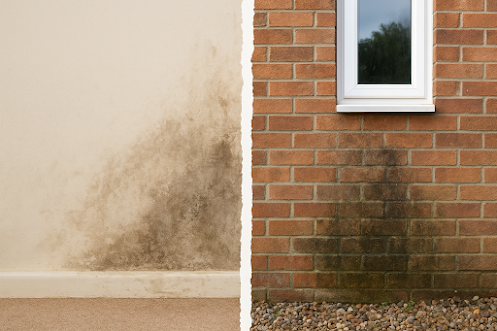
Now you know the causes of rising damp, how about the signs? Well, the first signs of rising damp are often small but should never be ignored. They usually start at the lower part of the walls, gradually spreading higher if left untreated.
Look out for:
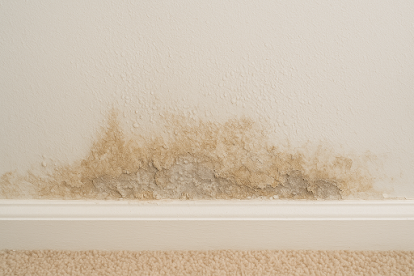
- Tide marks – Brown, yellow, or grey stains rising from the skirting board upward.
- Peeling wallpaper – Paper curling away at seams or bubbling across the surface.
- Flaking paint – Paint blistering or lifting, leaving damp-feeling patches underneath.
- Damaged skirting boards – Timber that looks rotten, crumbly, or warped.
- Persistent musty smell – A stale odour even after airing the room, often stronger in humid weather.
These symptoms don’t just affect how your home looks. They indicate the underlying causes of rising damp — moisture travelling upwards through masonry or timber.

What is the most common cause of rising damp?
Rising damp usually occurs when moisture from the ground finds its way into walls. Several factors can contribute to this problem:
- Failed or missing damp-proof course: The DPC is damaged, poorly installed, or never fitted. It’s meant to block moisture from rising, but over time, slats can crack, plastic sheets can degrade, and workmanship flaws can leave gaps. Without a functioning DPC, rising damp becomes almost inevitable.
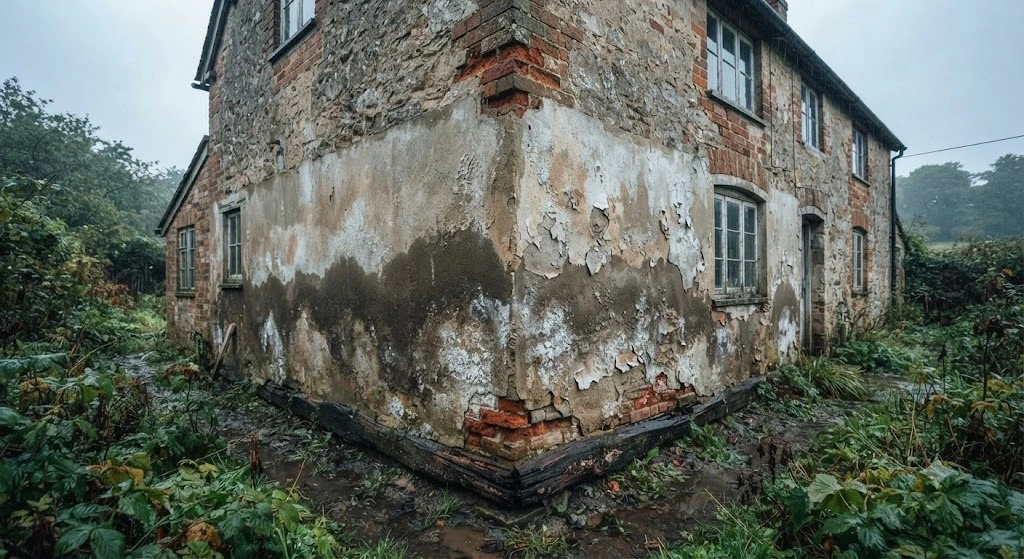
- Bridged DPC: Water can bypass a perfectly intact DPC if soil, paving, decking, or debris sits above its level. Raised patios, garden soil piled against walls, or even accumulated debris can “bridge” the DPC and allow moisture to climb the wall.
- Porous building materials: Bricks, stone, or mortar that naturally absorb water more easily can worsen rising damp. Older homes often used softer materials that soak up moisture quickly, making damp signs like tide marks, peeling paint, and crumbling plaster more severe.
- Poor maintenance: Cracks in mortar, damaged pointing, eroded render, or blocked drainage provide entry points for water. Even minor neglect can let moisture establish itself and gradually spread through the walls.
- High external ground levels: Landscaping, patios, or soil built up above the DPC effectively negates its purpose. Water can reach the walls directly, which is why homes that were dry for decades sometimes develop rising damp after garden or ground-level changes.
Our Expert Take: In our experience, over 70% of rising damp cases we investigate are caused by some form of damp-proof course failure. Many homeowners assume their house is protected just because it has a DPC, but time, weather, and poor building work often compromise it. If you suspect damp, always start by checking whether your DPC is intact, visible, and at least 150mm above ground level.
How do you find the source of rising damp?
Pinpointing the source of rising damp is essential before you even think about repairs. Without knowing where the moisture is coming from, any fix will only be temporary. The causes of rising damp vary, so a methodical check is the best approach.
Ways to identify the source include:
- Inspect the damp-proof course (DPC) – Check if it’s visible, intact, and at least 150mm above the ground.
- Look for bridging – Soil, raised flowerbeds, or paving that sits too high against the wall can bypass the DPC.
- Test moisture levels – A professional surveyor may use a damp meter to measure how far the damp has travelled.
- Check external walls – Look for cracks in brickwork, mortar joints, or pointing that may allow water in.
- Compare rooms – Damp in one section but not another may highlight a localised source like damaged mortar.
Sometimes, homeowners confuse condensation or leaks with rising damp. A proper inspection eliminates guesswork and prevents unnecessary treatments.
How long does it take for rising damp to appear?
Rising damp does not usually show up immediately. It can take months or even years for the signs to become obvious. That’s because moisture first travels through the porous structure of walls before finally reaching a point where it’s visible.
Key factors affecting the timescale include:
- Property age – Older homes with no DPC show signs faster than modern houses.
- Climate – Wet, humid conditions accelerate moisture movement.
- Material type – Softer bricks or stone soak up water quicker than harder masonry.
- Level of maintenance – Damaged mortar or cracks can speed up the spread.
For some, signs may appear within a few months of a damp-proof course failing. In other cases, it may take years before the tide marks or mould become visible.
Quick Insights: Rising damp usually progresses at about one metre per year, depending on conditions. However, it rarely rises more than 1.5 metres from ground level. If you see damage more serious than that, it’s often due to another cause — like penetrating damp or condensation.
What is the best way to stop rising damp?
The best way to stop damp is to address the root cause, not just the symptoms. Since the causes of rising damp are often structural, quick fixes like painting over stains won’t last. You need a treatment plan that stops moisture from travelling upward.
Main approaches include:
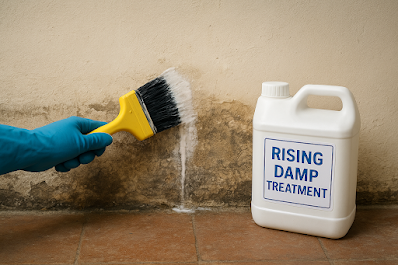
- Repair or install a damp-proof course (DPC) – Injection creams or physical barriers prevent water from rising through walls.

- Replastering with salt-resistant plaster – Prevents hygroscopic salts from keeping the wall damp even after repairs.
- Lowering external ground levels – Ensure soil, paving, or flowerbeds sit at least 150mm below the DPC.
- Improving drainage – Check gutters, downpipes, and soakaways to reduce external water pressure.
- Ventilation and heating – Helps reduce internal condensation, which can sometimes be masked as rising damp.
Treatments work best when tailored to the exact property. A professional damp survey is always the first step before committing to solutions.
Take Action: If you suspect rising damp, don’t delay. Collect evidence (photos, damp meter readings) and call in a qualified surveyor. Acting early avoids costly structural repairs and keeps your living space healthy.
Answering Common Questions about Causes of Rising Damp
What happens if you leave rising damp?
Leaving rising damp untreated allows moisture to spread further into walls and floors. Over time, plaster crumbles, timber rots, and mould can spread throughout ground-floor rooms. This leads to more expensive structural repairs.
Does rain make rising damp worse?
While rainfall itself isn’t among the causes of rising damp, it can lead to saturated soil, which in turn increases the amount of moisture available to be drawn into walls. So, in wet winters, symptoms may worsen because the walls are constantly exposed to damp ground.
Can you permanently fix rising damp?
Yes, rising damp can be permanently fixed when the root cause is addressed. Installing or repairing a DPC and replastering with salt-resistant plaster usually prevents recurrence. However, patching over symptoms without treatment will only mask the problem.
Is rising damp worse in summer or winter?
Rising damp is more visible in winter when walls are colder, and evaporation is slower. The damp patches and musty smell tend to be stronger in colder months. In summer, the problem doesn’t disappear — it just looks less severe.
Does opening windows reduce damp?
Opening windows helps reduce condensation but has no real effect on true rising damp. Since the moisture comes from the ground through the walls, ventilation alone cannot solve it. Proper structural treatment is needed.
How do I find the source of the damp smell?
A damp smell often comes from rotting timber or mould inside walls. Start by inspecting skirting boards, flooring edges, and low-level plaster. If the odour is strongest near ground level, it may point to the causes of rising damp rather than just condensation.