Quick Answer
The easiest way to tell the difference is where the moisture appears. Condensation forms as water droplets on cold surfaces like windows, while damp leaves stain, peeling paint, damaged plaster, or mould on walls and ceilings. Identifying the source will help you choose the right treatment.
That musty smell. That suspicious dark patch. Finding moisture in your house is instantly worrying. You know you have a problem, but what exactly is it? It’s easy to panic and think you need major structural work when all you really need is an open window.
That’s why getting the diagnosis right is so crucial. We need to look closely at the signs. Is the moisture coming from the air inside, or is it leaking in from the outside? Figuring out the difference between condensation vs damp is the first step toward a dry, healthy home.
Let’s start with the easier problem first.
All About Condensation
Condensation is the houseplant of moisture problems: annoying, common, and usually easy to manage with a few small adjustments. It is purely an internal air issue.
What is Condensation, and Why Does it Happen?
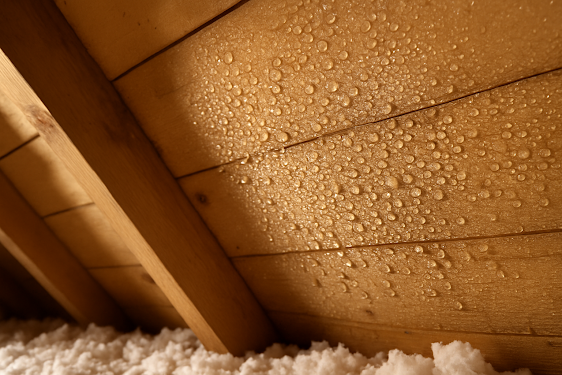
Think back to science class. Warm air holds water vapor. A lot of it. When that moisture-heavy air touches something cold—a window pane, an exterior wall—it cools down instantly. That rapid temperature drop makes the air dump its moisture onto the cold surface as liquid water. We call that critical point the dew point.
The Main Culprits:
- We make the air wet. Ever boiled pasta without a lid? Taken a long, hot shower? Dried clothes on a radiator? All that water goes straight into your air.
- We trap the moisture. Modern homes are sealed up tight. If you keep vents and windows closed, that moist air has nowhere to go.
- We create cold spots. Poorly insulated walls or single-pane windows act like magnets for that moist, warm air to settle and turn into water.
How to Spot Condensation
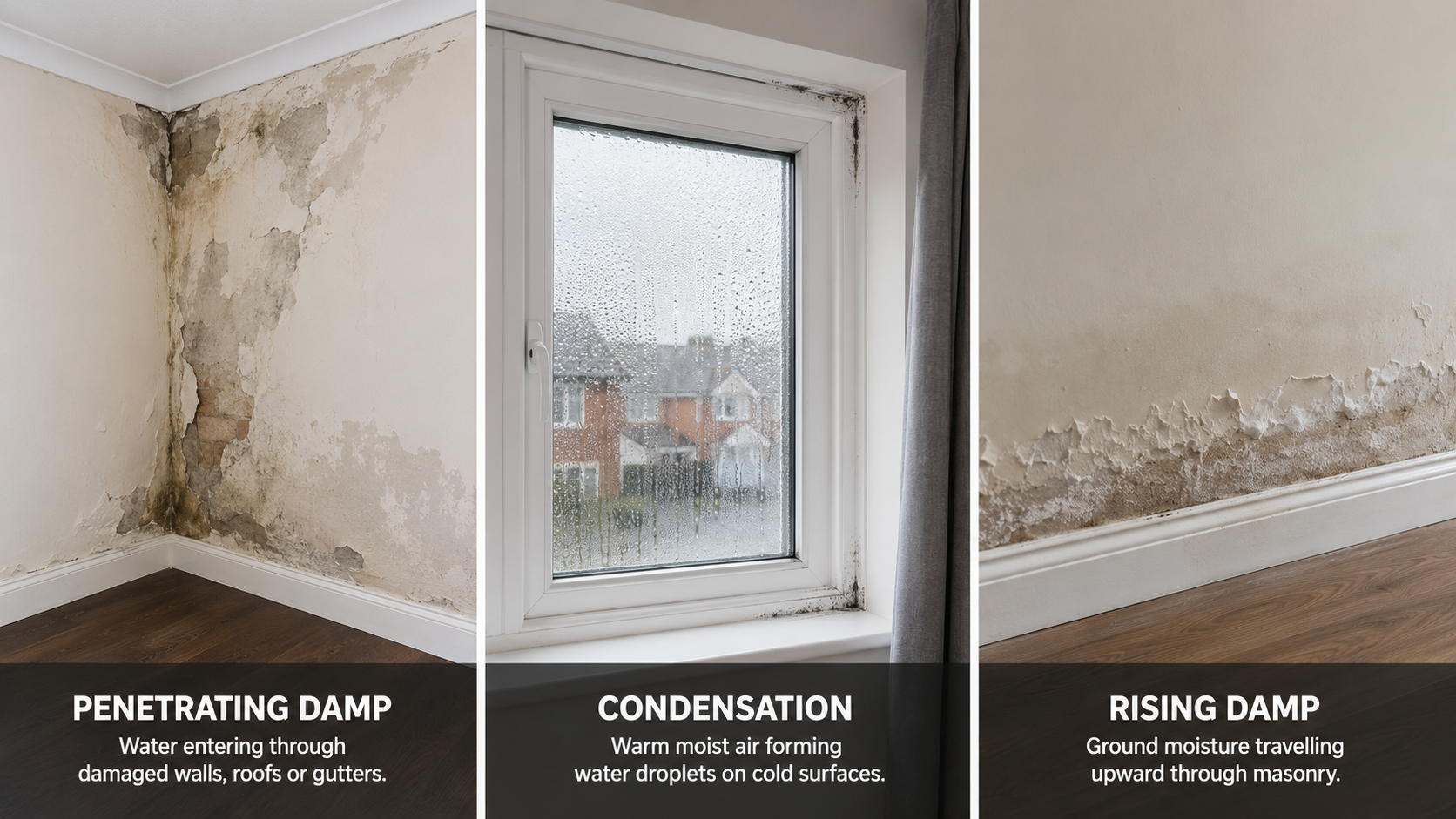
- The Window Sweat: The clearest sign is water running down your windows, especially first thing in the morning.
- Fuzzy Mould: Look for black, spotty mould in corners, behind your wardrobe, or along skirting boards. It happens where the air is still. This mould often looks slightly fuzzy or blurred on the edges.
- The Damp Odour: You get that heavy, unpleasant smell when you open a cupboard that hasn’t seen fresh air in a while.
Solutions for Condensation
You don’t need a builder; you need a change in habits. Fix the air, fix the problem.
- Ventilate, Ventilate, Ventilate. Use extractor fans when cooking and showering. Keep them running for a bit afterward. Open a window wide for a few minutes daily, even when it’s chilly.
- Cut the Moisture. Put lids on pots. Try to dry laundry outside or use a vented dryer. A decent dehumidifier is a great investment for actively pulling moisture out of the air.
- Keep it Warm. Maintaining a low, constant background heat stops your walls and windows from getting cold enough to trigger that condensation in the first place.
Understanding Structural Damp
If the moisture persists even after you’ve opened windows and reduced humidity, you are likely dealing with structural damp. This means water is entering the building fabric from outside. This is a building repair problem.
Rising Damp: Causes and Signs
Rising damp sounds dramatic. It happens when groundwater travels straight up your wall structure like a wick soaking up liquid.
- Cause: A failed or missing Damp Proof Course (DPC). This DPC is supposed to be the waterproof barrier, usually near the ground, that stops the capillary action.
- Signs: You will see a distinct, horizontal “tide mark” stain (yellow or brown) on the wall. This damage is only found on the ground floor and stops abruptly, usually at about one meter high. Look for white, fluffy salt deposits (efflorescence) on the surface as the water evaporates.
Penetrating Damp: Causes and Signs
This is just a leak, but it’s coming into the wall itself.
- Cause: A defect in the exterior. Think broken roof tiles, a blocked or cracked gutter spilling water down the wall, cracked exterior render, or faulty window seals.
- Signs: You see localized damp patches that can appear at any height—even in the middle of a ceiling. They feel cold and wet. Crucially, they tend to get worse immediately after heavy rain.
Solutions for Structural Damp
Stop treating the symptoms. Find the leak and fix it.
- Rising Damp Solution: This needs a specialist. They will often inject a chemical DPC to create a new barrier in the brickwork.
- Penetrating Damp Solution: This requires a builder or roofer. Inspect the outside of your home. Clear the gutters, replace the broken roof tile, or repair the cracked render.
Condensation vs Damp—The Showdown
Ultimately, figuring out the true nature of your moisture comes down to two simple questions: Is the water source inside or outside? and Is the damage localized or widespread? The fight between Condensation vs Damp is won by detailed observation.
How to Spot the Difference: Breaking Down the Clues
To definitively tell them apart, we need to look beyond the obvious.
1. The Source and Speed of Onset
Condensation is an air quality issue. It develops gradually, often overnight or during the colder months, and the problem often starts immediately when you dry clothes indoors or shower. Structural damp, conversely, is a leak issue. Rising damp develops slowly over years, but penetrating damp can appear quite suddenly after a heavy storm or a pipe burst.
2. Effects on Materials
This is a critical distinction. Condensation primarily affects the surface. It leads to black, fuzzy mould on paint and wallpaper. The underlying plaster usually remains dry and intact. Structural damp, whether rising or penetrating, attacks the structure itself. It causes the plaster to blister, bubble, and crumble. It also causes the decorative finish to come away from the wall. You’ll also see direct damage to timber, such as skirting boards decaying.
3. Location and Height
Condensation is usually highest in the room where the air is warmest and most humid, like a bathroom or kitchen, and often concentrates in cold corners or behind bulky furniture. Rising damp is non-negotiable: it is always on the ground floor and limited to about one meter. Penetrating damp is sporadic and often appears high up on walls or across ceilings, directly pointing to the external defect.
4. The Residue Left Behind
Condensation leaves behind black, fungal mould (organic matter). Structural damp leaves behind white, salty crystals (efflorescence) on the surface as the mineral-rich water evaporates. This is a tell-tale sign that the water came through the masonry.
This clear breakdown of source, location, material damage, and residue should definitively guide your decision. Here is the table summarizing these differences:
| Feature | Condensation (Internal Problem) | Structural Damp (External Problem) |
| Water Source | Air moisture from within the home. | Ground, rain, or pipe water from outside/within the structure. |
| Location | Windows, corners, behind furniture. Can be on any floor or wall. | Rising Damp is ground floor only. Penetrating Damp is localized at the defect site. |
| Appearance | Black, fuzzy mould; surface water. | “Tide marks” or defined wet patches, white salt deposits, and crumbling plaster. |
| Worsens When | Cold weather and poor ventilation (winter). | After heavy rainfall or when the ground is saturated. |
| The Fix | Air Control: Ventilation, heating, and dehumidifying. | Building Repair: Fixing the DPC, roof, or faulty external element. |
How to Solve and Prevent Both
The prevention plan is simple.
For Condensation, fix the air. Open those windows, run the extractor fan, and watch your humidity levels.
For Structural Damp, fix the fabric. Be proactive. Check your gutters every autumn and look for damaged roof tiles. If simple air changes don’t clear the moisture within a few weeks, or if the signs match the structural defects above, call a specialist or surveyor for a proper diagnosis.
Frequently Asked Questions (FAQs)
1. Is the black mould from condensation harmful?
Yes, it can be. Mould releases spores that affect air quality. This can irritate respiratory issues, especially for people with asthma, children, or the elderly. Clean it quickly and fix the moisture source.
2. Can I treat penetrating damp myself?
If the cause is straightforward—like a blocked gutter or a bad bead of sealant—you probably can. If it involves roof work, external render repair, or plumbing, hire a professional. It’s safer and more effective that way.
3. Does painting over damp solve the problem?
No. Never. Painting over a damp patch, even with special anti-damp paint, is just hiding the symptoms. The water source will continue to cause damage behind the paint, which will eventually bubble and peel anyway. Fix the root cause first.
4. Will a dehumidifier help with rising damp?
A dehumidifier helps dry the air, which is good. It might slow down secondary issues like surface mould. However, it will not stop the water from climbing the wall. Rising damp requires fixing the failed DPC.
5. Why is my condensation worse in winter?
It’s because of the contrast. Your indoor air is warm and moist. Your outside walls and windows are freezing. That creates a huge temperature difference, meaning the air hits the cold surfaces much faster, easily reaching the dew point.
6. Can condensation lead to structural issues?
Yes, eventually. While the moisture is on the surface, long-term, unmanaged condensation can lead to wet rot in timber elements like window frames, skirting boards, or floor joists if they stay consistently wet for years.
7. What’s the difference between efflorescence and mould?
Efflorescence is a white, powdery, or fluffy salt deposit. It’s left behind by structural damp (rising/penetrating) as the water evaporates. It’s mineral. Mould is a living, usually black or green fungal growth caused by surface moisture (condensation). It’s organic and poses a health risk.