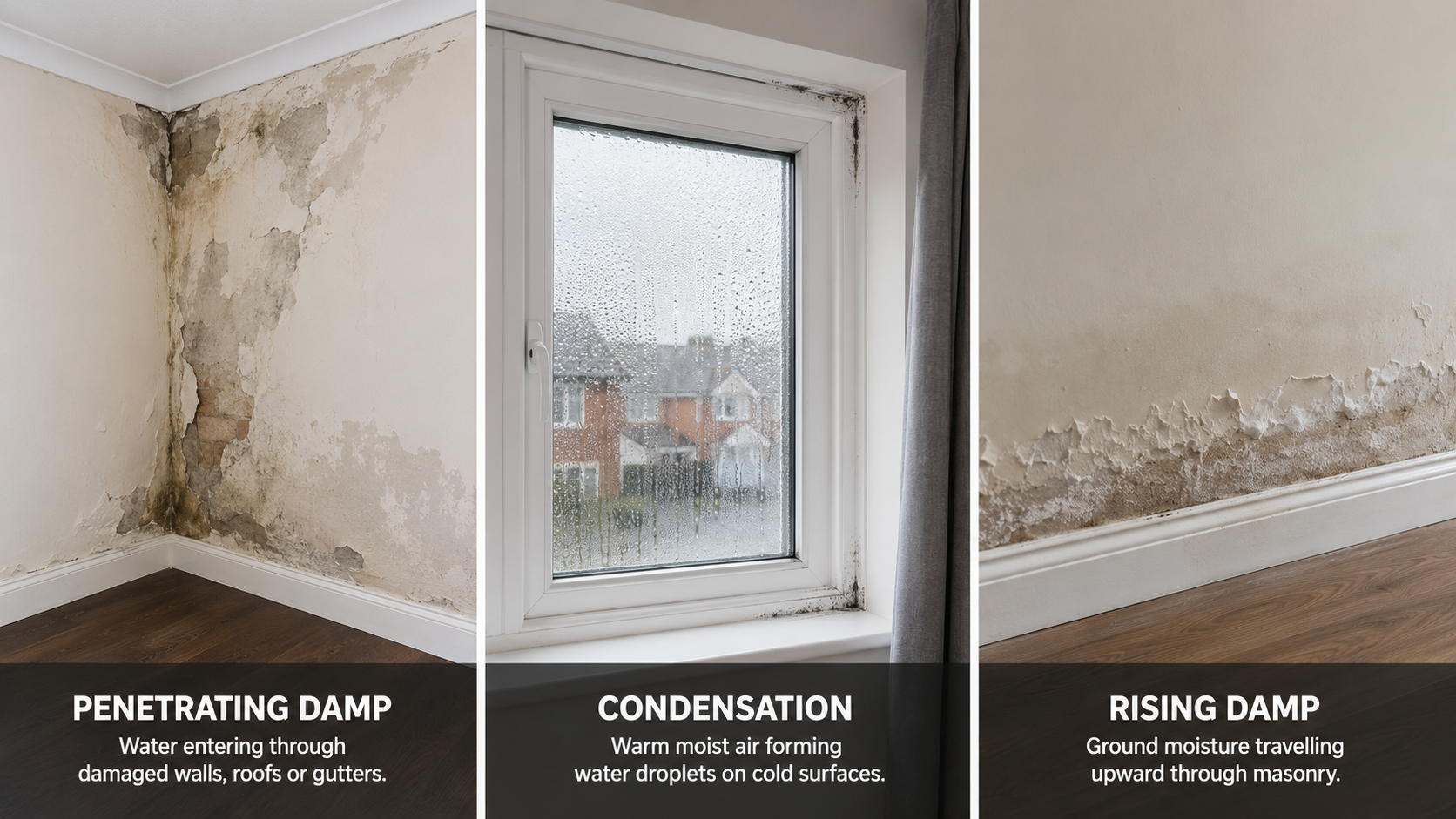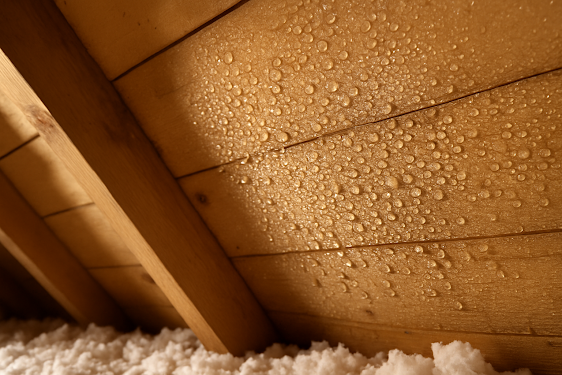
Loft condensation is one of those problems that often stays unnoticed until you catch a faint smell of damp or see water droplets clinging to the underside of the roof felt. Sometimes it shows up as dark patches on insulation or timber that feels slightly soft to the touch.
At its core, loft condensation is simply moisture that has escaped from the rooms below. Warm air naturally rises, carrying water vapour from everyday life. When that air meets the colder surfaces of your roof, the moisture turns into tiny beads of water. That is condensation.
Every home releases moisture daily. Cooking, showering, and even breathing add to it. The loft, being the highest and often the coldest part of the house, becomes the perfect trap. During the colder months, when outside temperatures drop, this process becomes even more noticeable.
Some level of condensation is quite normal, especially in winter. What matters is whether your loft can dry out again. When moisture lingers for days, that is when rot, mould, and insulation damage start to creep in.
Quick Insight: A typical family home produces around 10 to 20 litres of water vapour every single day. Without good ventilation, a lot of that moisture ends up drifting into the loft.
Why Condensation Happens in Loft Spaces
Condensation in lofts happens for one simple reason: warm, moist air meets a cold surface. The physics are straightforward, but the real-world causes inside your home are more layered.
The biggest contributor is heat rising from the living areas. Warm air carries water vapour upwards, and any small gaps in ceilings or around light fittings act as escape points. That moisture collects in the roof space, where the temperature drops quickly.
In many homes, insulation has been added over the years to retain heat inside the living areas. While that saves energy, it can also reduce natural airflow into the loft. When air movement slows, humidity builds up and stays trapped.
Another factor is the type of roof covering. Felt underlay, especially older non-breathable kinds, tends to hold moisture against the rafters. Newer breathable membranes do a much better job of letting vapour escape.
It can also come down to lifestyle. Drying laundry indoors, long showers, or unvented tumble dryers can all raise indoor humidity. Once that moisture rises, it only needs a small temperature drop to condense.
Expert Tip: If you suspect loft condensation, check during a cold morning. Moisture will often appear as fine droplets on the underside of the roof felt before the sun warms the roof.
Our other related article you may want to read: Condensation on Windows: Causes and Fixes
How to Tell If Your Loft Has a Condensation Problem
Most people only notice loft condensation after it has already caused damage. Early signs are subtle but easy to miss unless you know what to look for.
Start with the insulation. If it feels damp or heavy, that means water has been dripping down from above. Look at the roofing felt or membrane next. A healthy roof lining should feel dry to the touch. Tiny droplets across the surface suggest condensation is forming regularly.
Dark stains on rafters or mould patches on the ends of roof timbers are also strong clues. Over time, timber affected by moisture may start to warp or soften. In extreme cases, you may even see water marks spreading through the ceiling below.
Smell is another giveaway. A musty or earthy scent, especially after rain, usually points to trapped dampness rather than a leak.
If you have a torch, inspect around the eaves where the roof meets the wall. This area often stays coldest and shows the first signs of trouble.
Practical Step: Use a simple digital humidity meter in your loft for a week. Anything consistently above sixty per cent means the air is holding too much moisture, and the space needs better ventilation.
Preventing Condensation in Lofts
Stopping condensation in a loft is less about quick fixes and more about balance. You are trying to keep warmth inside the home while still letting moisture escape before it collects on cold surfaces. That balance takes a mix of airflow, insulation, and sensible habits inside the house.
The first and most important step is ventilation. A loft needs a steady movement of air to stay dry. Without it, any warm air that slips through the ceiling gets trapped. Soffit vents, ridge vents, and tile vents all help create that circulation. Fresh air should enter at the eaves and exit near the ridge to carry moisture out naturally.
If your loft has insulation that blocks the eaves, the air cannot move freely. Check that insulation is pulled back slightly from the edges to leave space for airflow. You can fit plastic vent trays between rafters to guide air in without compressing the insulation.
Quick Insight: A well-ventilated loft should feel slightly cool even in winter. If it feels warm or stuffy, the air is not circulating properly.
Improving Insulation and Vapour Control
Better insulation helps reduce condensation, but only if it is installed correctly. The goal is to keep ceilings warm while keeping the loft cold and well-ventilated. Problems usually appear when the insulation is uneven or packed too tightly against the roof.
Make sure insulation covers the ceiling evenly without leaving gaps. However, do not stuff insulation into the eaves, as that blocks air paths. If you are topping up old insulation, use the same type or thickness to avoid moisture pockets.
Vapour control layers are another key part of the system. These thin membranes, fitted just below the plasterboard ceiling, slow down how much moisture can rise into the loft. Many older homes do not have them, which is why condensation tends to appear in winter.
If you are renovating or re-insulating, consider adding one. It can dramatically reduce the amount of water vapour reaching the roof space.
Expert Tip: Always check that recessed lights and extractor fans are properly sealed. Even small gaps around them can act like chimneys that push warm, moist air straight into the loft.
Managing Moisture Inside the Home
Loft condensation does not begin in the loft. It begins inside your living areas. The more moisture you create indoors, the harder your roof has to work to stay dry.
Simple changes can make a real difference. Use extractor fans when cooking or showering. Keep lids on pots while boiling food. Open windows for a few minutes each day to let humid air out and dry air in.
Avoid drying clothes on radiators if you can. It releases a surprising amount of moisture into the air. If you must dry laundry indoors, place a dehumidifier nearby to capture the excess vapour.
Heating also plays a part. Homes that stay cold during the day and are then heated quickly in the evening experience more condensation because warm air meets cold walls and ceilings. Keeping the temperature steadier helps reduce those spikes.
Practical Step: If your loft keeps collecting moisture, try running a small mains-powered dehumidifier in the hallway or landing below. Removing humidity before it rises can significantly cut condensation above.
You may want to read: Condensation on Windows Overnight: Why It Happens and What You Can Do
Long-Term Solutions for a Dryer Loft
Preventing loft condensation in the short term is one thing, but keeping the space dry for good means thinking long-term. It is not just about adding vents or thicker insulation. The key is to understand how your home breathes and how air moves through it all year round.
Start by keeping the loft structure itself healthy. Timber needs to stay dry and able to breathe. If you ever notice dark staining, mould growth, or a damp smell that lingers, do not just wipe it away. Look for the source. It might be a blocked vent, a leaking pipe, or insulation that has sagged over time and trapped moisture beneath it.
If your home is older, the felt lining under the roof tiles may not be breathable. Replacing it with a modern membrane can make a huge difference. Breathable membranes allow vapour to pass out but stop rain and snow from coming in. It is a larger job, but it often pays off in fewer condensation issues and better roof health overall.
Quick Insight: Breathable roofing membranes can reduce loft humidity levels by up to forty per cent compared with traditional felt linings.
When Condensation Signals a Bigger Problem
Most loft condensation is caused by trapped humidity rather than leaks, but sometimes the two can look similar. If you notice water marks in specific spots, particularly after rain, it might be worth ruling out a small roof leak first.
You should also pay attention to the timing. True condensation tends to appear during cold spells or overnight and then fade during the day. Persistent damp patches that do not dry out even after warm weather usually point to a structural issue.
Another red flag is insulation that feels soaked through. Light surface dampness can dry naturally, but if the insulation is wet enough to feel heavy, it will stay that way and reduce energy efficiency. In that case, remove the affected area, let the timbers dry fully, and replace them with new insulation.
Expert Tip: If your loft feels damp even in summer, check for blocked vents under the eaves. Birds, insects, and dust often clog them, silently cutting off airflow.
Regular Maintenance and Seasonal Checks
A dry loft is not something you can set and forget. Small checks throughout the year make all the difference. The best time to inspect is early winter and again in early spring. That way, you can catch any moisture issues before they turn into mould or timber decay.
Walk around carefully and look for small clues. Any dark patches on insulation, water droplets on the felt, or a faint earthy smell should prompt a closer look. Keep the loft hatch open for a short time after inspecting to help the air circulate.
If you use your loft for storage, try not to pack items tightly against the rafters. That blocks airflow and can trap moisture. Use open shelving instead of plastic tubs when possible so air can move freely around belongings.
Regularly cleaning soffit and ridge vents also helps more than most people realise. Even a thin film of dust can slow airflow dramatically.
Practical Step: Add loft checks to your regular home maintenance routine. Five minutes every few months can prevent long-term problems and expensive repairs later on.
When to Get Professional Help
Sometimes the problem goes beyond what a homeowner can fix alone. If you notice persistent mould on rafters, visible rot, or large wet patches that do not fade, it is worth calling a specialist. A professional survey can identify exactly where the moisture is coming from and whether there is a hidden leak or insulation fault.
Roofers and damp specialists can also test airflow in your loft using small sensors to see how well it is ventilated. That data can guide whether you need additional vents or changes to the insulation layout.
The good news is that once the cause is corrected, lofts tend to dry out naturally. Timber that looks worrying at first glance often recovers fully once it stays dry for a few weeks.
Quick Insight: Many homeowners mistake persistent condensation for roof failure. In reality, simple ventilation or insulation adjustments solve most cases completely.
Final Thoughts
Condensation in lofts is not just a cosmetic issue. It is a sign that the air in your home is carrying too much moisture and that your roof space cannot breathe as it should. The fix is rarely complicated, but it does require consistency and awareness.
Good ventilation, steady heating, and small maintenance habits go a long way. When your loft stays dry, the whole house benefits — from better insulation performance to fewer cold spots and a healthier indoor climate.
A loft might seem like the least used part of a home, yet it plays a quiet but crucial role in keeping everything below it dry, warm, and comfortable.
Frequently Asked Questions
1. Can loft condensation cause mould in other parts of the house?
Yes, it can. Moist air trapped in the loft eventually seeps back down into the house, especially around ceiling edges. Over time, that can encourage mould to grow on upper walls or near light fittings. Keeping the loft dry helps protect the whole property, not just the roof space.
2. Does adding more insulation make loft condensation worse?
Sometimes it can. Insulation keeps heat in the rooms below, but it can also trap moisture if airflow is blocked. The key is not how much insulation you add but how you install it. Always keep eaves and vents clear so that air can move freely above the insulation layer.
3. Can installing a bathroom extractor fan reduce loft condensation?
Absolutely. Bathrooms are one of the biggest moisture sources in a home. If the extractor fan vents directly outside instead of into the loft, it removes a huge portion of humid air that would otherwise drift upward.
4. Is condensation in the loft dangerous for electrics?
Yes, especially if you have lighting cables or junction boxes running through the space. Prolonged dampness can corrode metal parts or affect insulation around the wires. If you see signs of condensation near electrical fittings, have them checked by a qualified electrician.
5. Can loft condensation appear suddenly after roof work?
It can. When new insulation or underlay is fitted, the loft’s airflow pattern often changes. If vents were covered accidentally or if a new non-breathable membrane was installed, moisture might start collecting where it never did before. That is why checking ventilation after any roof work is essential.
6. Should I open the loft hatch to help it dry out?
That can help temporarily, especially after spotting fresh condensation. Opening the hatch allows warm, dry air from the house to mix with the cooler loft air. However, it should not be your long-term solution. If the loft only stays dry when the hatch is open, there is an underlying ventilation issue that needs fixing.
7. Can a dehumidifier in the loft solve condensation completely?
A dehumidifier can help reduce moisture, but it does not address the real cause. Without proper ventilation, condensation will return once the machine is switched off. Think of it as a short-term helper rather than a cure. The long-term fix always lies in balanced airflow and insulation.